Clinical information
Coeliac disease is a systemic autoimmune disorder for which genetic predisposition is a major contributing factor. It can affect various organ systems. The prevalence of the disease is estimated to be around 1 % with experts assuming a large number of undiagnosed cases due to “atypical” or mild symptoms. Coeliac disease is triggered by the consumption of gluten, which makes up around 90 % of the protein content of many cereal grains. The disease manifests mostly by severe inflammation and damage of the mucous membrane of the small intestine (enteropathy). In conjunction with the resulting disturbance to the nutrient absorption, a broad spectrum of gastrointestinal and non-gastrointestinal clinical symptoms can develop, including chronic diarrhoea, vomiting, abdominal pain and cramps, short stature, weight loss, delayed puberty, spontaneous abortions, anaemia and osteoporosis. A chronic rash in the form of Duhring’s dermatitis may also occur.
Both genetic components (in particular the alleles that code for the surface receptors HLA-DQ2 (HLA-DQ2.2 and -DQ2.5) and HLA-DQ8) and environmental factors are involved in the development of coeliac disease. Enteropathy, which is characteristic of coeliac disease, is caused by an overreaction of the immune system to gluten components, especially the so-called gliadin. Gliadin is only partially digested in the small intestine. If there are gaps in the intestinal epithelium, as is typical in patients with coeliac disease, the resulting gliadin fragments (peptides consisting of 33 amino acids, 33-mer) can pass through the intestinal barrier and reach the connective tissue underneath. There, the enzyme tissue transglutaminase (tTG) modifies (deamidates) the amino acid glutamine (Q) into the amino acid glutamate (E) at certain sites of the gliadin peptides. This modification brings on an immunological reaction in individuals with a genetic predisposition. The activation of B cells leads to the production of antibodies against the deamidated gliadin peptides and against the body’s own tissue transglutaminase. In addition, T cells secrete pro-inflammatory cytokines, which cause an inflammatory reaction in the tissue. The immunological overreaction and the inflammation of the epithelium of the small intestine lead to apoptosis of the enterocytes, atrophy of the villi and widening of the intestinal crypts (hyperplasia). These damages mean that the intestinal mucosa is no longer able to absorb enough nutrients from the digested food and to transport them into the bloodstream.
Diagnostics
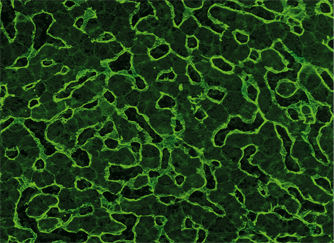
According to the guidelines of the European Society of Pediatric Gastroenterology, Hepatology and Nutrition (ESPGHAN) (Husby et al., 2020), patients with relevant symptoms should first be tested for anti-tTG antibodies (IgA) and total IgA antibodies, as these antibodies are particularly specific and sensitive. If the anti‑tTG IgA titer is more than ten times the upper limit of normal (> 10x ULN) and a later sample is positive for anti‑endomysium (EmA) IgA, the biopsy required to confirm the diagnosis can be omitted. The guidelines also emphasise the usefulness of coeliac-specific IgG-based tests, such as those for the detection of antibodies against deamidated gliadin peptides (DGP). If there is a general IgA deficiency – as often observed in coeliac disease patients – anti-DGP antibodies (IgG) are considered an important alternative indicator of coeliac disease. EmA, which targets tTG as antigen, can be detected by indirect immunofluorescence testing using tissue sections of primate liver, primate oesophagus or primate intestine.
Euroimmun offers various tests (ELISA, EUROLINE, ChLIA and IFA) for the detection of antibodies against tissue transglutaminase, endomysium and deamidated gliadins.
Molecular genetic detection of alleles encoding the heterodimeric surface receptors HLA-DQ2 (HLA-DQ2.2 and -DQ2.5) and HLA-DQ8 plays an important role in the diagnosis of coeliac disease. Although these markers are not very specific – around 50 % of the healthy population also test positive for HLA-DQ2.2, -DQ2.5 and/or -DQ8 – the absence of these risk factors serves as an important exclusion criterion. The negative predictive value is almost 100 %. Consequently, if neither HLA-DQ2.2, -DQ2.5 nor -DQ8 is detected in a patient, coeliac disease can be ruled out with a high degree of certainty. The EUROArray HLA-DQ2/DQ8 Direct and the EUROArray HLA-DQ2/DQ8-h Direct were developed specifically for reliable detection of the disease-associated HLA-DQA1 and HLA-DQB1 alleles that code for the subunits of HLA-DQ2.2, -DQ2.5 and -DQ8.
Files
Test systems for coeliac disease diagostics




