

Together at the pulse of neurology
With a focus on the patient, Euroimmun is shaping the future of diagnostics by actively contributing to and participating in cutting-edge science as the foundation of innovation. As one of the world’s leading manufacturers of medical laboratory diagnostics, we develop and produce state-of-the-art test systems and automation solutions to aid in the diagnosis of diseases and improve global healthcare.
Euroimmun has its finger on the pulse of neurology through active basic research, a comprehensive and unique range of tests for the detection of neurobiomarkers, which is constantly being expanded on the basis of this research, and a service portfolio characterised by complete solutions for every laboratory.
Discover our contribution to research
Patient-oriented fundamental research is a priority of Euroimmun. Our “Institute for Experimental Immunology” maintains collaborations with universities, clinics and renowned research facilities worldwide in order to study new antigens and develop innovative methods. This provides the foundation for the development of new test systems.
Patient stories - Anti-NMDAR encephalitis
Are you looking for a customised solution for your neurodiagnostics?
Contact us today and get personalised advice:
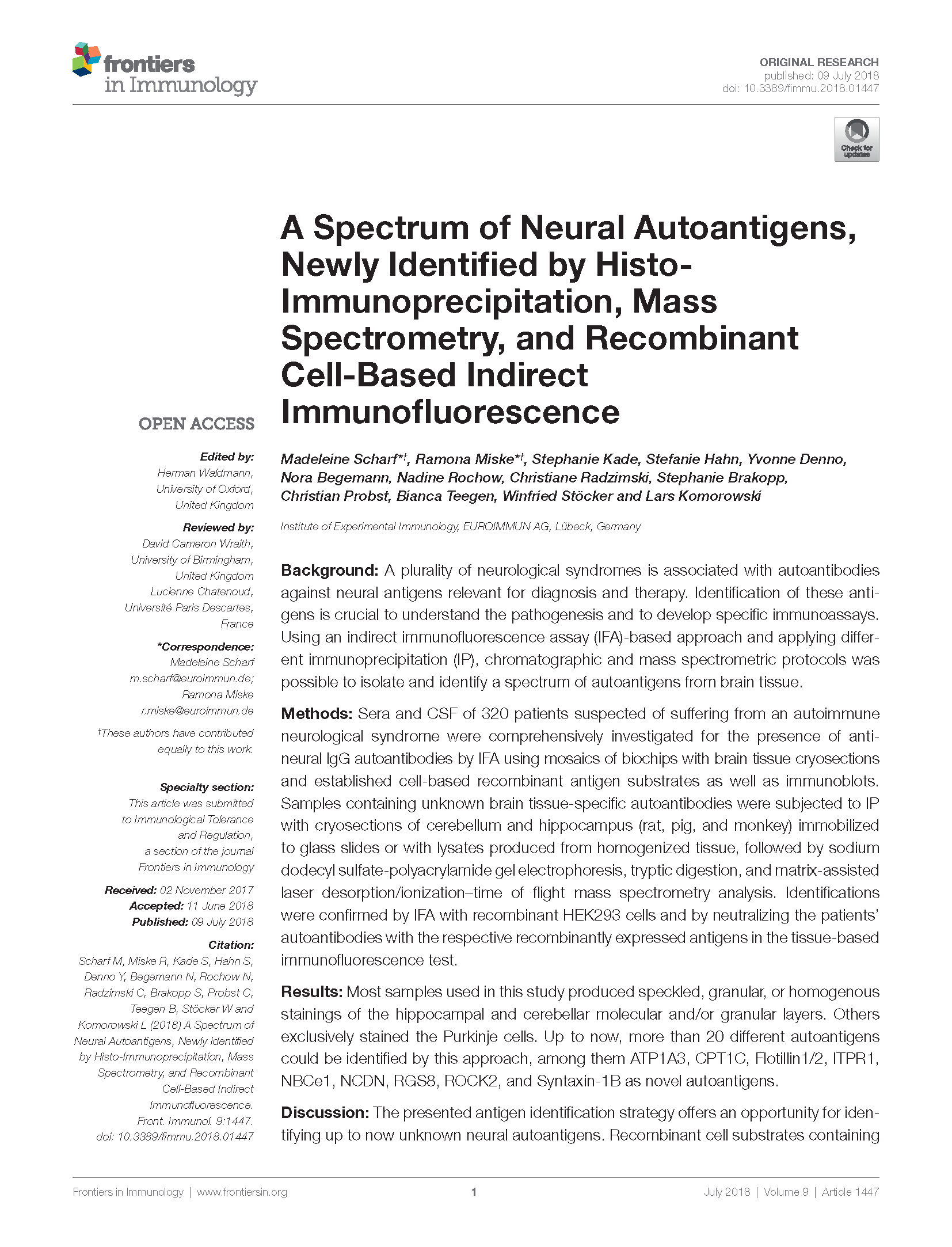
A new method for the identification of new target antigens in neurological autoimmune diseases:
Scharf M, et al. A spectrum of neural autoantigens, newly identified by histo-immunoprecipitation, mass spectrometry and recombinant cell-based indirect immunofluorescence. Frontiers Immunol 9:1447 (2018).
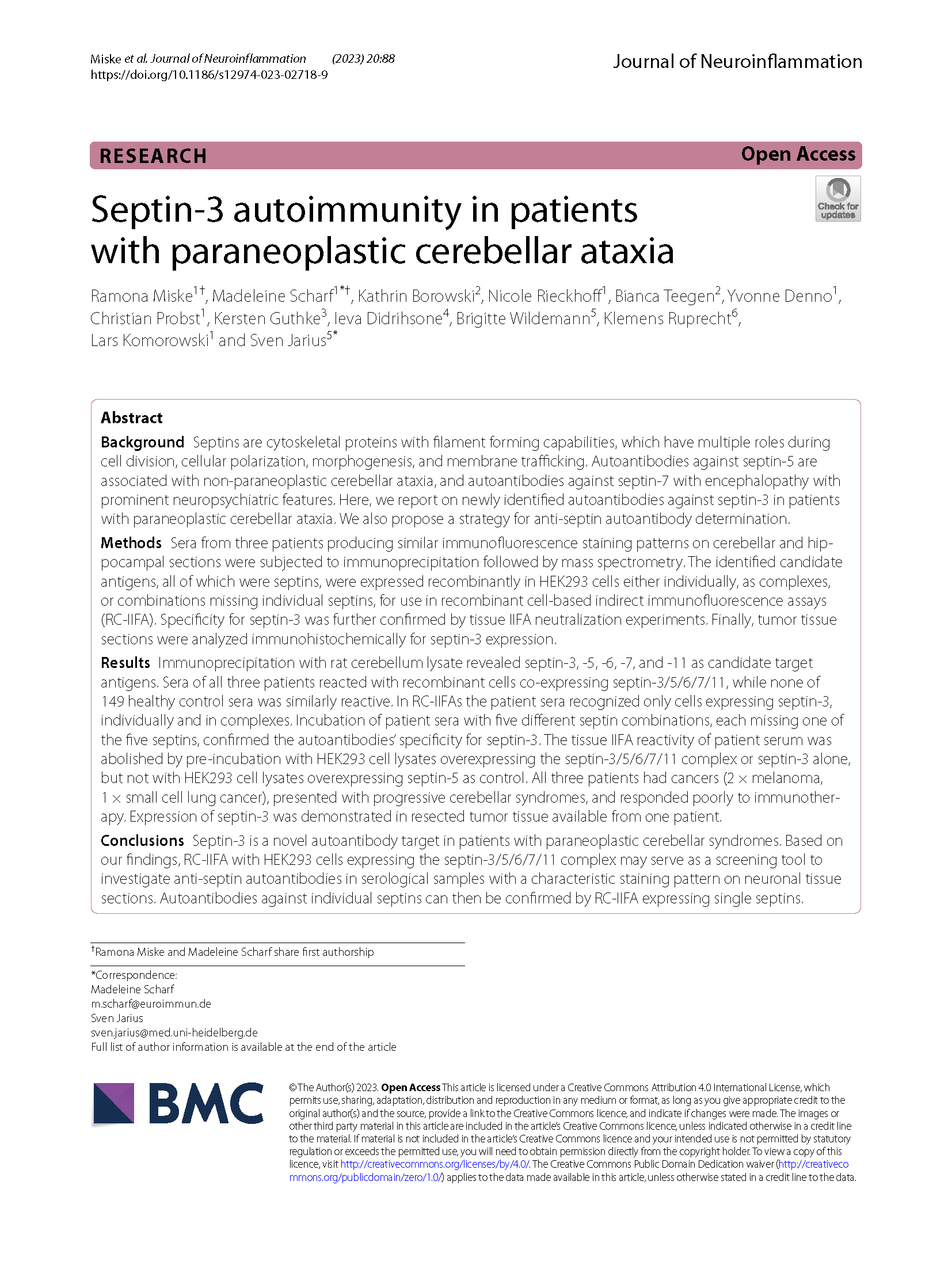
Discovery of septin-3 as an autoantibody target in patients with paraneoplastic cerebellar syndromes:
Miske R, et al. Septin-3 autoimmunity in patients with paraneoplastic cerebellar ataxia. J Neuroinflammation 20(1):88 (2023).
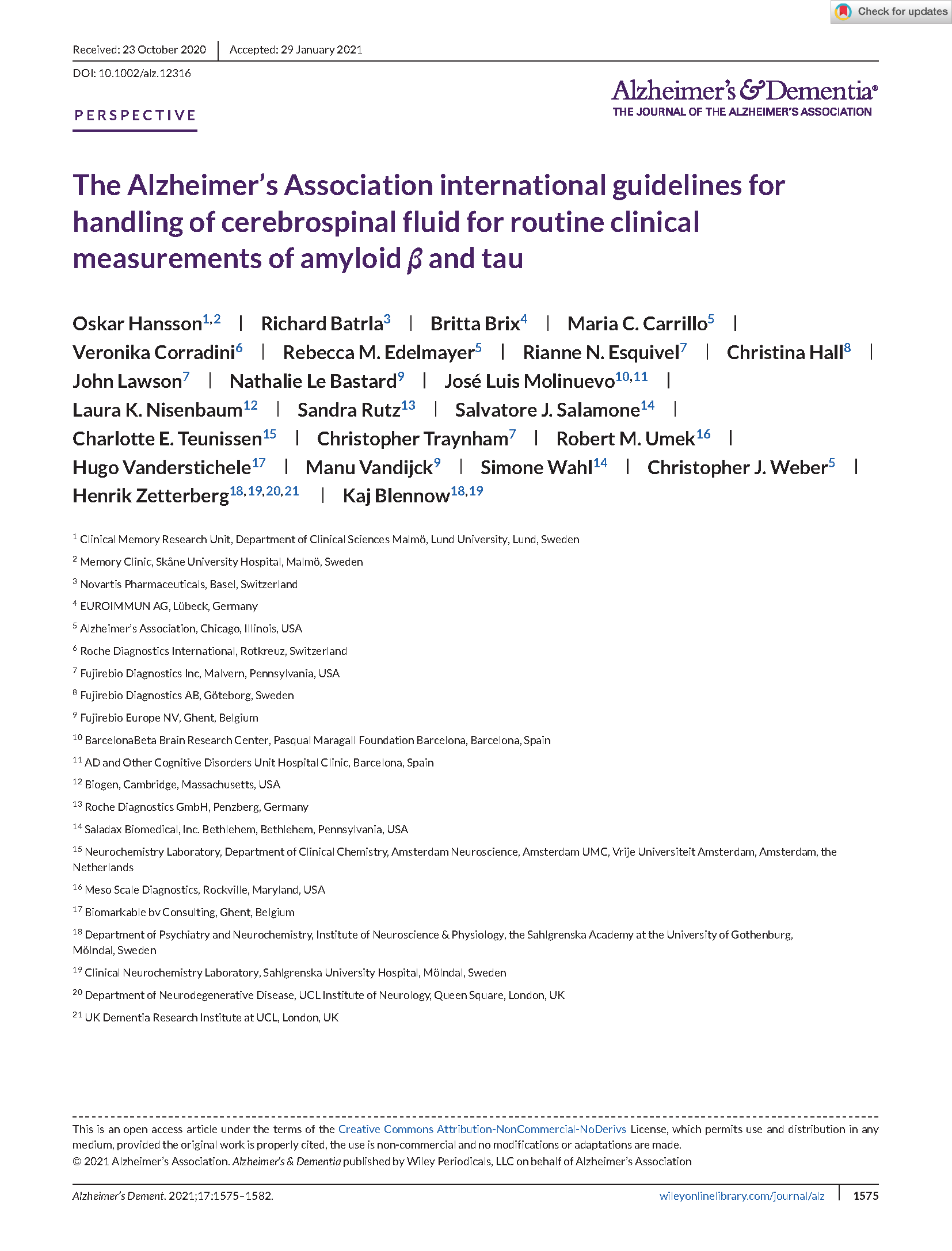
Guidelines for the preanalytical handling of CSF samples in order to reduce variability in measurement results:
Hansson O, et al. The Alzheimer's Association international guidelines for handling of cerebrospinal fluid for routine clinical measurements of amyloid beta and tau. Alzheimers Dement 17(9):1575-1582 (2021).
List of references
Scientific articles on important research contributions made by Euroimmun over the last 5 years:
- Kunath N, et al. ITPR1 autoantibody-associated autoimmunity as a cause of newly emerging cognitive decline mimicking Alzheimer's disease: Case report and brief review of the literature. J Neuroimmunol 409:578774 (2025).
- Kreye J, et al. Specific viral antibodies associate with anti-NMDAR encephalitis after herpes simplex encephalitis. Brain Behav Immun 130:106073 (2025).
- Corty M, et al. Anti-VGLUT2 autoantibodies in neurological diseases. Brain Behav Immun 129:470-484 (2025).
- Oyaert M, et al. Towards harmonization of autoantibody detection in relation to paraneoplastic neurological syndromes (PNS): a European Survey on laboratory practices. Clin Chem Lab Med [online ahead of print] (2025).
- Hegelmaier T, et al. Chimeric antigen receptor T cells in treatment-refractory DAGLA antibody-associated encephalitis. Med 6(9):100776 (2025).
- Breuer A, et al. Coexistence of CN1A autoantibodies in GAD65 encephalitis exacerbates neurodegeneration : Novel autoantibodies in GAD65 encephalitis. J Neuroinflammation 22(1):194 (2005).
- Vorasoot N, et al. DAGLA autoantibody experience at Mayo Clinic. J Neurol 272(7):460 (2025).
- Kawaguchi N, et al. Comparison of the sensitivity of anti-acetylcholine receptor enzyme-linked immunosorbent assay and radioimmunoassay in different treatment periods. Clin Exp Neuroimmunol (2025).
- Pache F, et al. Broad analysis of serum and intrathecal antimicrobial antibodies in multiple sclerosis underscores unique role of Epstein-Barr virus. Neurol Neuroimmunol Neuroinflamm 12(1):e200332 (2025).
- Miske R, et al. Identification of DAGLA as an autoantibody target in cerebellar ataxia. J Neurol Neurosurg Psychiatry 5(11):1064-1076 (2024).
- Peter E, et al. Anti-RGS8 paraneoplastic cerebellar ataxia is preferentially associated with a particular subtype of Hodgkin's lymphoma. J Neurol 271(10):6839-6846 (2024).
- Arendt P, et al. Differentiation of Alzheimer’s disease from other neurodegenerative disorders using chemiluminescence immunoassays measuring cerebrospinal fluid biomarkers. Front Dement 3:1455619 (2024).
- Römpler K, et al. Evaluation of the EUROIMMUN automated chemiluminescence immunoassays for measurement of four core biomarkers for Alzheimer's disease in cerebrospinal fluid. Pract Lab Med 41:e00425 (2024).
- Jarius S, et al. Improving the sensitivity of myelin oligodendrocyte glycoprotein-antibody testing: exclusive or predominant MOG-IgG3 seropositivity-a potential diagnostic pitfall in patients with MOG-EM/MOGAD. J Neurol 271(7):4660-4671 (2024).
- Talucci I, et al. Molecular dissection of an immunodominant epitope in Kv1.2-exclusive autoimmunity. Front Immunol 15:1329013 (2024).
- Arlt FA et al. KCNA2 IgG autoimmunity in neuropsychiatric diseases. Brain Behav Immun 117:399-411 (2024)
- Khatib L, et al. Autoimmune cerebellar ataxia associated with anti-glutamate receptor δ2 antibodies: a rare but treatable entity. Cerebellum 23(1):260-266 (2024).
- Daguano Gastaldi V, et al. Factors predisposing to humoral autoimmunity against brain-antigens in health and disease: Analysis of 49 autoantibodies in over 7000 subjects. Brain Behav Immun 108:135-147 (2023).
- Discovery of Septin-3 as an autoantibody target in patients with paraneoplastic cerebellar syndromes:
Miske R, et al. Septin-3 autoimmunity in patients with paraneoplastic cerebellar ataxia. J Neuroinflammation 20(1):88 (2023). - Vilaseca A, et al. The expanding spectrum of antibody-associated cerebellar ataxia: report of two new cases of anti-AP3B2 ataxia. J Neurol 270(9):4533-4537 (2023).
- Identification of anti-septin-7 autoantibodies in patients with encephalopathy and myelopathy:
Hinson SR, et al. Septin-5 and -7-IgGs: Neurologic, Serologic, and Pathophysiologic Characteristics. Ann Neurol 92(6):1090-1101 (2022). - Jarius S, et al. Inositol 1,4,5-trisphosphate receptor type 1 autoantibody (ITPR1-IgG/anti-Sj)-associated autoimmune cerebellar ataxia, encephalitis and peripheral neuropathy: review of the literature. J Neuroinflammation 19(1):196 (2022).
- Jarius S, et al. Rho GTPase-activating protein 10 (ARHGAP10/GRAF2) is a novel autoantibody target in patients with autoimmune encephalitis. Neurol 269(10):5420-5430 (2022).
- McKeon-Makki I, et al. Adenylate kinase 5 (AK5) autoimmune encephalitis: Clinical presentations and outcomes in three new patients. J Neuroimmunol 367:577861 (2022).
- Álvarez I, et al. Added value of cerebrospinal fluid multimarker analysis in diagnosis and progression of dementia. Eur J Neurol 28(4):1142-1152 (2021)
- Cirkel A, et al. Paraneoplastic encephalomyeloradiculitis with multiple autoantibodies against ITPR-1, GFAP and MOG: case report and literature review. Neurol Res Pract 3(1):48 (2021)
- International guidelines for the preanalytical handling of CSF samples in order to reduce variability in measurement results:
Hansson O, et al. The Alzheimer’s Association international guidelines for handling of cerebrospinal fluid for routine clinical measurements of amyloid beta and tau. Alzheimers Dement 17(9):1575-1582 (2021) - Identification of AP3B2 as an autoantigen in patients with ataxia:
Honorat JA, et al. Autoimmune gait disturbance accompanying adaptor protein-3B2-IgG. Neurology 93(10):e954-e963 (2019) - Evidence forthe association between autoantibodies against RGS8 and paraneoplastic cerebellar syndrome with lymphoma:
Miske R, et al. Autoantibodies against the Purkinje cell protein RGS8 in paraneopastic cerebellar syndrome. Neurol Neuroimmunol Neuroinflamm 8(3):e987 (2021) - Schanda K, et al. Differential binding of autoantibodies to MOG isoforms in inflammatory demyelinating diseases. Neurol Neuroimmunol Neuroinflamm 8(5):e1027 (2021)
Discover our unparalleled spectrum of neurobiomarkers
Euroimmun offers a unique portfolio of test systems for the diagnostics of neurological diseases. Discover our spectrum of analysis parameters for the areas of CNS infections, neuronal autoimmunity and neurodegeneration that allow you to determine...

Autoimmune diagnostics
… more than 60 autoantibodies against neural structures, including new and exclusive parameters.

Infection diagnostics
… CXCL13 and intrathecal antibodies against many different pathogens.

Neurodegeneration
… beta-amyloids, tau proteins and neurofilaments (plus further research parameters).
Are you looking for a customised solution for your neurodiagnostics?
Contact us today and get personalised advice:
Euroimmun – The Neuro Company
From research to all-round solutions for laboratories: Take a look behind the scenes and get to know highly motivated Euroimmuners and their valuable contribution to neurodiagnostics.
Discover our solutions for diagnostics
Benefit from complete solutions for your laboratory: We offer not only a wide spectrum of diagnostic assays, but also innovative automation systems to meet your needs. Less hands-on time, more capacity. And you can count on our extensive advice and continuous support.
